
A Record You Can Return To
On the ancient practice of writing about love
There’s a reason we keep love letters.
Not screenshots of text messages, or DMs saved to a folder somewhere, but the real thing—handwritten, ink-pressed, folded into envelopes and tucked away in drawers for decades. The paper yellows. The handwriting fades. And still we keep them, because something about words on a page holds meaning differently than any other medium. A photograph shows you what someone looked like. A letter tells you what they were thinking. What they couldn’t say out loud. What they wanted you to remember.
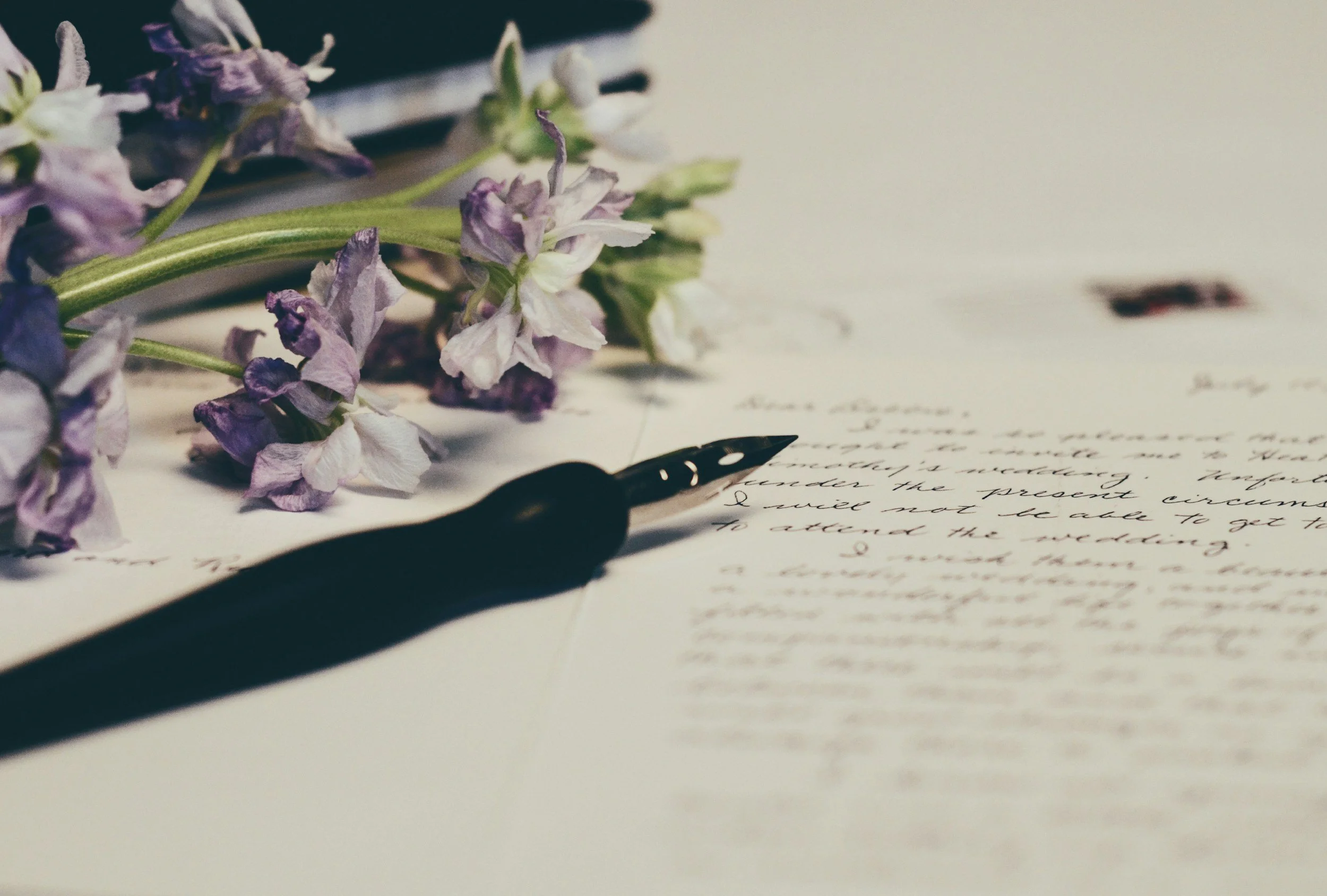
For most of human history, this was how love got preserved. Journals. Correspondence. The painstaking practice of writing down what mattered, because the act of writing was itself a declaration: this is worth keeping. Victorian lovers exchanged letters thick with longing and formality. Soldiers wrote home from distant wars, trying to compress everything they felt into a few pages that might or might not arrive. Parents kept diaries of their children’s earliest years, not because anyone asked them to, but because they understood that memory is unreliable and paper is not.
We’ve largely abandoned this practice. Not because we care less, but because the tools have changed. We document our lives constantly now—more than any generation before us—but we do it in formats designed to disappear. Stories that expire in twenty-four hours. Posts that get buried in the scroll. Captions that say “best day ever” without explaining why. The impulse to record is stronger than ever, yet the records themselves have never been more ephemeral.
Weddings sit at the center of this contradiction. No event in modern life gets more documentation. Photographers capture every angle. Videographers produce cinematic reels. Guests post in real time, adding their own layers to the archive. By the end of the night, thousands of images exist. Yet the parts of weddings we tend to remember most? The special moments that don’t necessarily make it onto film.
This is the premise behind The Love Dispatch: that weddings deserve a written record. Not instead of photos and video, but alongside them. A document that captures what got said, what got felt, what the day meant to the people who were there. Something that functions less like a highlight reel and more like those letters in the drawer—a piece of writing you can return to across years and find something you’d forgotten, or something you understand differently now that time has passed.
The Love Dispatch creates a document designed for revisiting, the way you might return to a favorite book, or a box of old letters, finding new resonance each time. The couple who reads it the week after their wedding will experience it one way. The same couple, reading it on their fifth anniversary, will find different passages standing out. The version they encounter at twenty years, with children of their own, will feel like a different document entirely—not because the words have changed, but because the readers have.
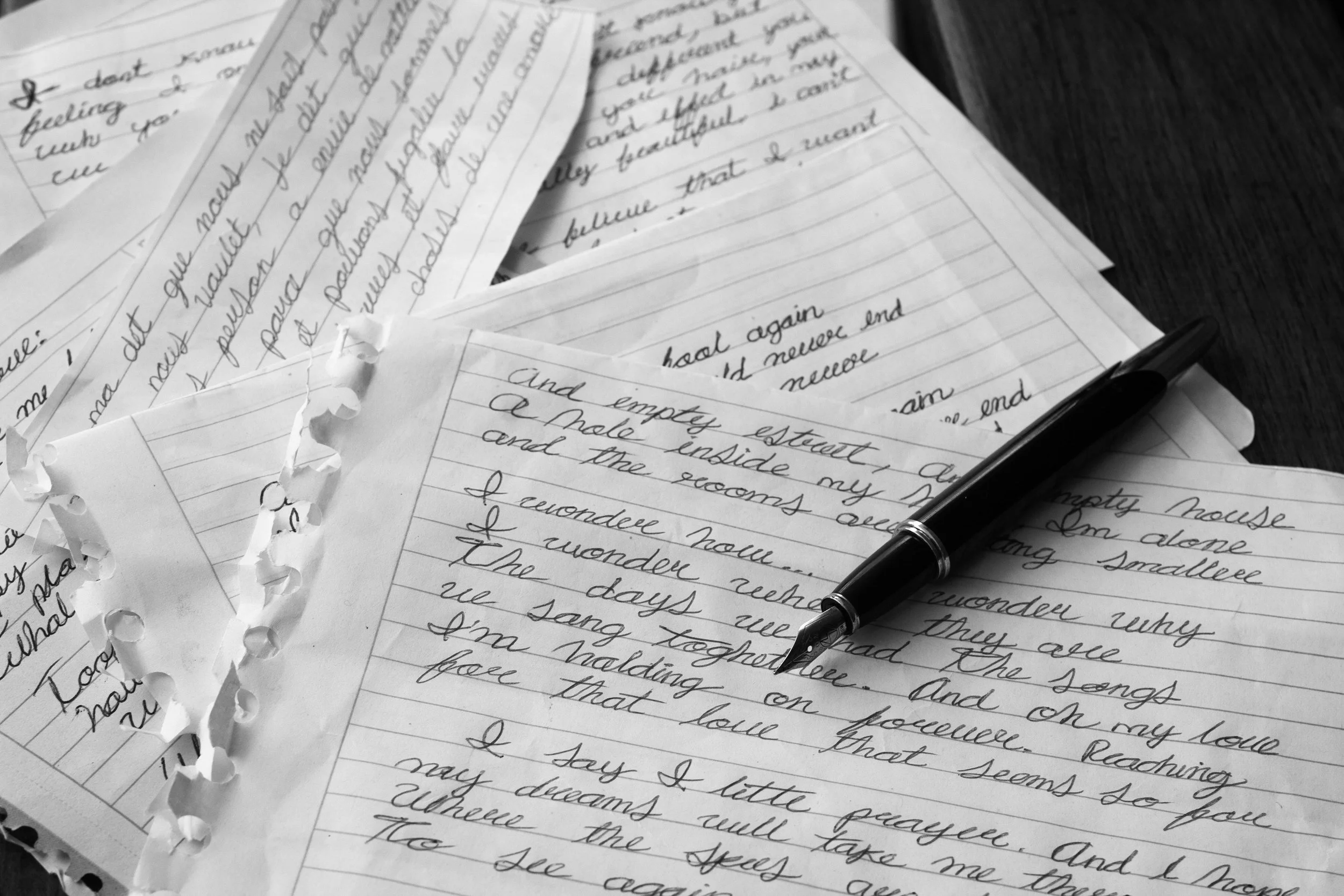
See, the romance of old love letters wasn’t just about the words themselves. It was about the knowledge that someone sat down and chose to write. That they took time, and care, and thought about what to say. That they believed the recipient was worth the effort of articulation. The letter was a gift twice over—once in what it said, and once in the act of saying it.
Wedding journalism operates on the same principle. It’s a declaration that the day mattered enough to be rendered in careful, considered language. That the voices of the people who attended deserved to be transcribed, edited, and preserved. That somewhere down the line, when the couple wants to remember what it felt like to be at the beginning, they’ll have something to hold onto.
A story that holds still and waits for you to come back. A document that does for your wedding what love letters have always done: makes meaning permanent, holds feeling in place, gives the people you love a voice that lasts longer than memory.
The practice is ancient. The application is new. But the impulse is the same one that sent lovers to their desks with ink-stained fingers and racing hearts: the belief that some things are worth writing down. That the people we love deserve to have their words kept somewhere. That the best way to honor a day is to make sure it survives.
